Hit enter to search or ESC to close
5 November 2025
The marine environment presents one of the most aggressive and unforgiving challenges for industrial materials. The constant presence of saltwater, combined with high humidity and UV exposure, accelerates the corrosion and degradation of most metals, leading to frequent equipment failure, costly maintenance, and operational downtime. For critical applications in this sector, from offshore platforms to desalination plants, a material that offers unparalleled corrosion resistance is not just an advantage—it is a necessity. Hebei Xiangguang Metal Net Co., Ltd. provides a definitive solution with our high-performance titanium wire cloth. This advanced material is renowned for its exceptionally long lifespan in marine applications, offering a lifetime of reliable service where other metals would rapidly succumb to corrosion.
l The exceptional performance of titanium wire mesh in marine environments is rooted in the fundamental properties of titanium metal. Titanium is a highly reactive element, but it immediately forms a stable, continuous, and adherent oxide layer when exposed to oxygen. This passive film, primarily composed of titanium dioxide, is highly inert and acts as a perfect barrier against corrosive agents.
l In seawater, this means it is completely resistant to pitting, crevice corrosion, and stress-corrosion cracking, which are the common failure modes for stainless steels and other alloys. This inherent immunity allows titanium wire mesh to perform flawlessly in seawater filtration systems, offshore brine handling, and other saltwater processing applications for decades without significant wear or loss of integrity.
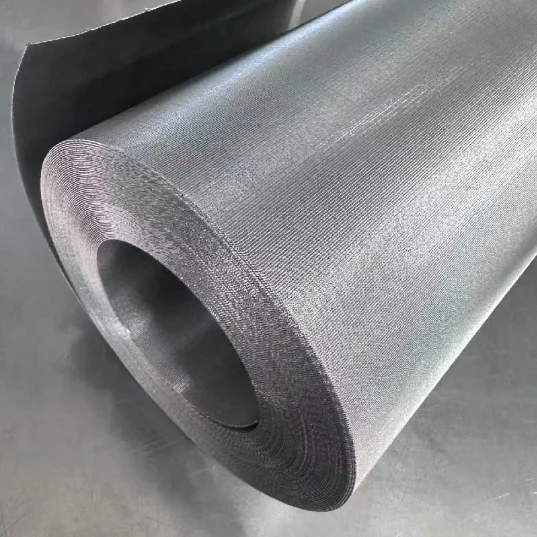
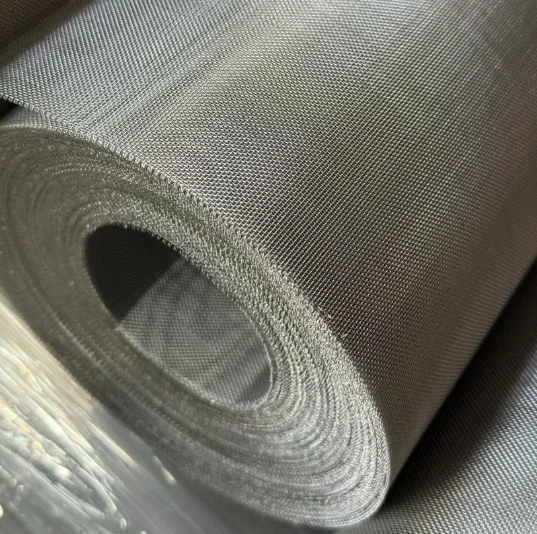
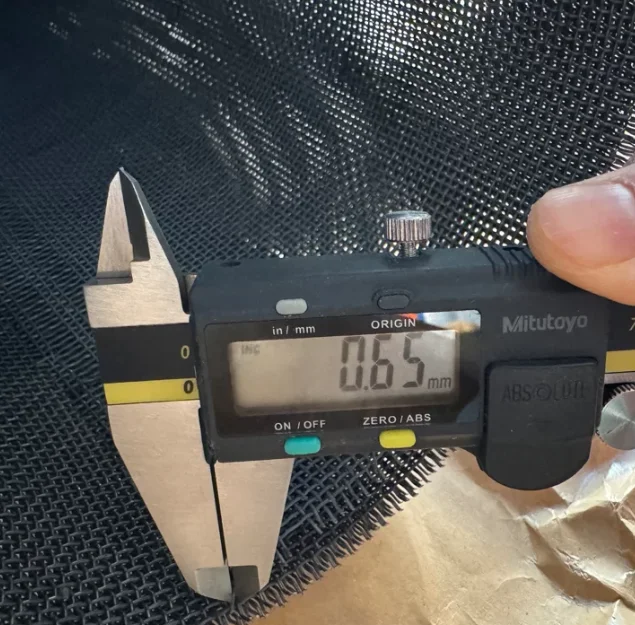
l To harness the superior material properties of titanium, the manufacturing process must be equally precise. Our woven titanium mesh is produced on specialized looms that carefully interlace titanium wires into a variety of weave patterns, such as plain weave, twill weave, or Dutch weave. This process allows for the creation of a woven titanium mesh with extremely accurate and consistent pore sizes, which is critical for precision filtration tasks.
l The ability to maintain this precision, combined with titanium's strength and corrosion resistance, makes woven titanium mesh an ideal choice for critical filtration in the marine industry, such as filtering seawater for injection systems in oil and gas or protecting delicate heat exchanger tubes from debris in ship cooling systems.
l When evaluating materials for marine use, titanium wire cloth stands out for its total life-cycle cost advantage. While the initial investment is higher than that of stainless steel or copper-nickel alloys, its performance justifies the cost. Titanium wire cloth does not require protective coatings, cathodic protection, or the frequent replacement that plagues other materials.
l Its longevity eliminates the massive costs associated with downtime, maintenance, and parts replacement in remote and difficult-to-access offshore locations. For applications like seawater screen filters, anodes cages, and demister pads in marine vessels, specifying titanium wire cloth is a strategic decision that ensures maximum operational uptime and reliability for the entire lifespan of the asset.
Titanium wire mesh is so resistant to saltwater corrosion due to the stable, protective oxide layer that forms spontaneously on its surface. This layer is highly chemically inert and adheres strongly to the underlying metal. When exposed to seawater, this passive film prevents chloride ions from penetrating and attacking the base metal.
The lifespan of woven titanium mesh in ocean environments is vastly longer than that of stainless steel. While high-grade stainless steels may last for several years before succumbing to pitting and crevice corrosion, woven titanium mesh is essentially corrosion-proof in seawater. It is not uncommon for woven titanium mesh components to remain in service for decades without any signs of degradation.
Yes, titanium wire cloth is suitable for many high-temperature marine applications. The protective oxide layer on titanium remains stable at elevated temperatures, providing continued corrosion resistance. This makes titanium wire cloth an excellent material for applications such as filters in marine exhaust gas scrubbers or components in thermal desalination plants where both high temperatures and a corrosive saline atmosphere are present.
The primary marine industries that use titanium wire mesh include offshore oil and gas, shipbuilding, desalination, and power generation. Specific applications include seawater intake filters, cathode protection anode cages, demister pads in distillation units, and filters for ballast water treatment systems.
Absolutely. Titanium wire mesh is highly fabricable and can be customized into a wide range of shapes and sizes to meet specific engineering requirements. It can be cut, rolled into cylinders, or formed into complex three-dimensional shapes for specialized filters and components.