Hit enter to search or ESC to close
19 December 2025
Imagine a garment that can sense your touch, light up with your heartbeat, or discreetly shield you from electromagnetic fields. This is not distant science fiction, but the imminent future of fashion, being meticulously stitched together today with a material as resilient as it is imperceptible: ultra fine stainless steel wire. This remarkable innovation is redefining the intersection of technology and textiles, transitioning from industrial uses to become the foundational nervous system of next-generation wearable technology.
The journey of steel wire into the realm of haute couture and techwear is a story of radical miniaturization. For decades, steel wire was synonymous with industrial strength—used in cables, springs, and structural components where durability was paramount. However, its transition to fashion required a fundamental transformation, both in form and function. The first critical step was the development of specialized stainless wire. By incorporating chromium and nickel alloys, this new generation of wire gained essential corrosion resistance, allowing it to withstand the harsh environments of human wear, including perspiration and frequent washing. Yet, to truly integrate with textiles, it needed to become virtually invisible to the touch. This led to the breakthrough of ultra fine stainless steel wire. Through advanced multi-pass cold drawing techniques, manufacturers can now produce filaments with diameters as slender as 0.025mm to 0.08mm—finer than a human hair. This process, often involving dozens of precise drawing stages and intermediate annealing, transforms a robust metal rod into a supple, textile-compatible thread. Available in premium grades like AISI 304 and 316L, and offered in both soft annealed for flexibility and medium hard for structural support, this material represents the perfect marriage of metallic properties and textile requirements.
What establishes stainless wire as the conductor of choice for the interactive fashion revolution? Its unique combination of properties creates a compelling advantage over alternative conductive materials like polymers or coated fibers. First and foremost is its exceptional and enduring electrical conductivity. As a true metal, it provides a stable, low-resistance pathway for data and power, which is critical for the reliable operation of embedded sensors and circuits. Unlike some conductive inks that can degrade, the performance of stainless wire remains consistent over the lifetime of the garment. Second is its remarkable mechanical strength. Even at diameters below 0.05mm, it contributes significant tensile strength and anti-tear properties to fabrics, protecting delicate electronic pathways from the stresses of daily wear. Third, its superior corrosion resistance, especially in marine-grade alloys like 316L, ensures that smart functionality survives countless wash cycles and exposure to environmental elements. Finally, when processed into a soft annealed state, ultra fine stainless steel wire achieves a flexibility and drape that allows it to be seamlessly woven or knitted alongside natural and synthetic yarns, preserving the comfort and aesthetic appeal of the final textile. This synergy of durability, conductivity, and textile-friendliness is unmatched.
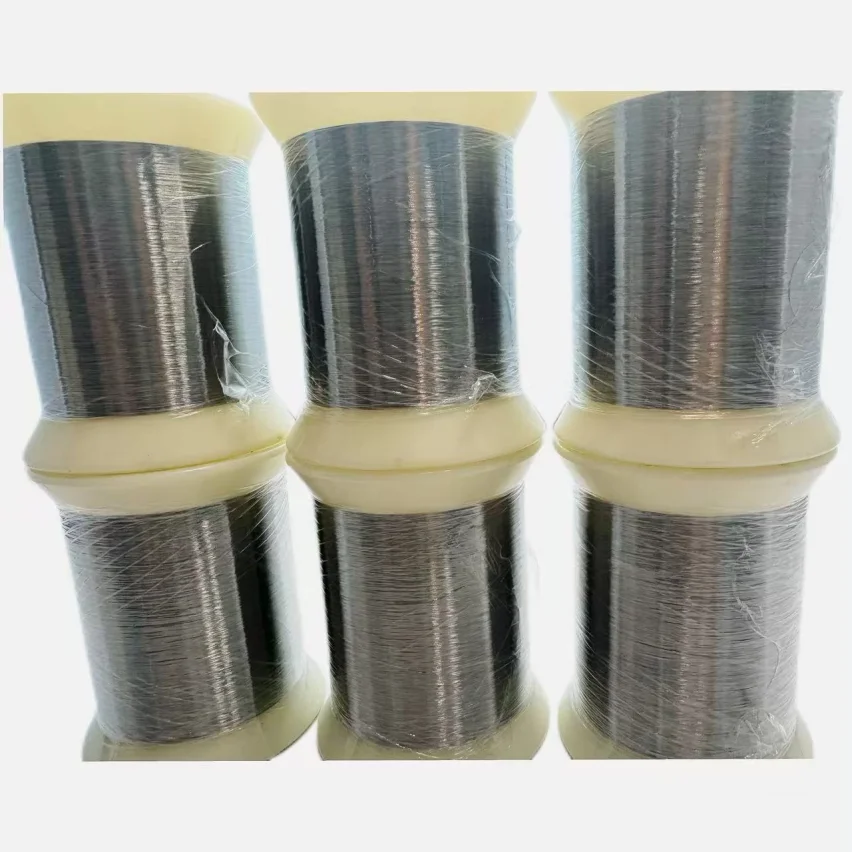
The practical applications of ultra fine stainless steel wire are already weaving a new reality for designers and engineers. Its role extends far beyond simple conduction, enabling entirely new categories of interactive and functional apparel:
· Responsive Sensory Fabrics: By embroidering or weaving the wire into precise capacitive circuits, designers can create textiles that respond to touch, pressure, or stretch. This turns a garment's surface into an intuitive interface for controlling devices, playing music, or interacting with digital environments.
· Dynamic Illumination and Climate Control: Serving as robust, flexible conductors, these wires can power integrated networks of micro-LEDs for customizable lighting and visual effects. Similarly, they can be configured as efficient, safe heating elements within garments, offering personalized thermal comfort.
· Biometric Monitoring and Health Tech: The reliable conductivity of the wire makes it ideal for integrating biomedical sensors directly into fabric. This enables continuous, clinical-grade monitoring of vital signs like heart rate, respiration, and muscle activity in comfortable, everyday clothing or high-performance athletic wear.
· Invisible Protection: Leveraging its inherent strength, ultra fine stainless steel wire is woven into high-performance protective fabrics for cut-resistant gloves and safety apparel. Simultaneously, its conductivity is used to create anti-static and electromagnetic shielding fabrics for specialized workwear in electronics and healthcare.
· Aesthetic and Functional Fusion: Beyond pure utility, the subtle metallic sheen and unique texture of the wire offer new avenues for decorative embellishment and structural design in luxury fashion, merging a futuristic aesthetic with hidden technological prowess.
The primary benefits are its exceptional durability, stable electrical conductivity, and superior corrosion resistance. Unlike polymeric alternatives, it maintains performance over time and through mechanical stress, ensuring the long-term functionality and washability of interactive garments.
Our ultra fine stainless steel wire is specifically processed to achieve textile-grade flexibility, especially in the soft annealed state. At diameters of 0.05mm and below, it is highly pliable and can be integrated into fabrics without compromising comfort or drape, behaving much like a high-tenacity synthetic yarn.
We specialize in ultra fine stainless steel wire made from AISI 304, 304L, 316, and 316L alloys. The available diameters range from 0.025mm to 0.08mm, with high-precision tolerance control of ±0.001mm to ensure consistency for weaving and electrical performance.
Absolutely. We provide comprehensive customization, including choice of alloy, hardness (soft annealed or medium hard), and spool type/weight. This ensures optimal compatibility with your specific knitting, weaving, or embroidery machinery and final product requirements.
Our reliability stems from dedicated production expertise, with teams specializing in this niche for over a decade. We operate numerous production lines with significant daily output capacity, ensuring consistent quality, tight tolerances, and on-time delivery for both prototype development and large-scale fashion tech manufacturing.