Hit enter to search or ESC to close
19 December 2025
In the world of industrial materials and architectural design, few substances bridge the gap between pure function and elegant form as effectively as brass wire mesh. This versatile material serves critical roles across diverse sectors, from heavy industry to high-end interior design. Its unique combination of durability, conductivity, corrosion resistance, and warm visual appeal makes it a preferred choice for engineers, architects, and designers alike. This article explores the multifaceted applications of brass wire mesh, examining its technical properties, comparing it with related materials like copper mesh, and showcasing its transformative potential in decorative applications.
To fully appreciate the value of brass wire mesh, it's essential to understand its close relative in the metal mesh family: copper mesh. What is copper mesh used for in practical applications? Copper mesh is primarily valued for its exceptional electrical conductivity, making it indispensable in specialized EMI/RFI shielding applications, premium electrical grounding systems, and telecommunications equipment. Its antimicrobial properties also make it valuable in medical environments and water purification systems. Unlike brass, which is an alloy, copper mesh represents the optimal choice for applications demanding maximum conductive performance.
This distinction matters because brass wire mesh occupies a strategically important middle ground. While brass inherits copper's favorable conductive characteristics, the addition of zinc creates a material with enhanced mechanical strength, superior corrosion resistance in many environments, and that signature warm golden appearance that designers prize. Where copper mesh serves specialized high-conductivity needs, brass wire mesh becomes the versatile workhorse for applications requiring a balanced combination of durability, functionality, and aesthetic appeal. This explains why brass has become the default choice for countless industrial and architectural applications where multiple performance criteria must be satisfied simultaneously.
The widespread adoption of brass wire mesh across industries stems from its carefully engineered technical advantages. Unlike single-purpose materials, brass mesh delivers a balanced portfolio of benefits that make it uniquely valuable in demanding applications. The manufacturing process utilizes specialized weaving techniques that determine the mesh's structural integrity. Plain weave creates consistent openings for general applications, while twill weave produces denser, more robust mesh for higher-pressure industrial applications.
Several key properties distinguish brass wire mesh from alternatives. Its excellent corrosion resistance ensures durability in challenging environments, from marine installations to chemical processing facilities. The material maintains good electrical and thermal conductivity, enabling effective performance in EMI shielding and heat exchange applications. Furthermore, its natural malleability allows for easy fabrication and installation, while its wear-resistant surface ensures long-term reliability. These technical characteristics explain why brass wire mesh consistently outperforms alternatives in applications requiring balanced performance across multiple metrics, particularly in filtration systems where consistent pore size and chemical resistance are critical.
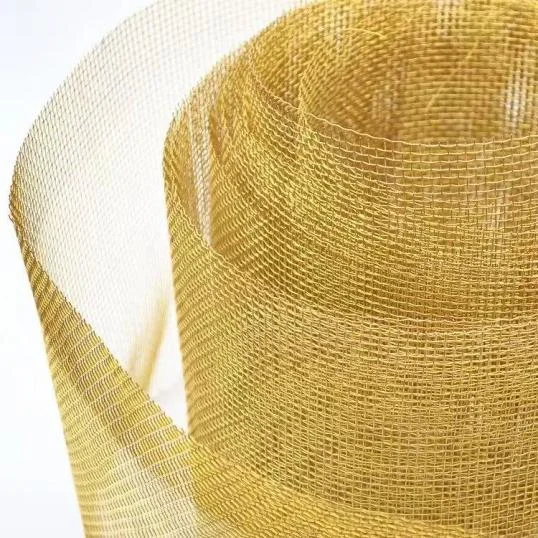
Beyond its industrial applications, decorative brass mesh has emerged as a transformative element in architectural and interior design. This application leverages the material's visual warmth and textural complexity to create spaces that balance functionality with aesthetic sophistication. Decorative brass mesh serves multiple roles in contemporary design, creating visually striking facades that modulate light and visibility while maintaining airflow. The material's inherent strength allows it to function as structural design elements in stair railings, room dividers, and ceiling systems that combine safety with elegance.
Designers particularly value how decorative brass mesh develops a natural patina over time, giving installations a living quality that evolves beautifully with age. The material's versatility extends across various design contexts—from commercial spaces where it creates distinctive brand environments through feature walls, to residential applications where it adds warmth as kitchen backsplashes or lighting fixtures. This combination of aesthetic flexibility and practical resilience explains why decorative brass mesh has become a preferred material for designers seeking to create spaces with both immediate visual impact and long-term value. The material successfully bridges the traditional divide between purely functional building components and expressive design elements.
Brass wire mesh offers exceptional filtration performance due to its precise weave patterns, corrosion-resistant properties, and durable construction. The material maintains consistent pore sizes under pressure while resisting chemical degradation from filtered substances. These characteristics make brass wire mesh particularly valuable in water, oil, and chemical filtration systems where reliability and longevity are paramount concerns for industrial operators.
Decorative brass mesh transforms architectural projects by adding visual depth, textural interest, and functional elegance. The material serves as dynamic cladding, screening, and spatial definition elements that interact beautifully with natural and artificial lighting. Its weathering characteristics and structural integrity make decorative brass mesh a sophisticated choice for creating memorable architectural features that age gracefully while maintaining their functional purpose over decades of use.
Brass wire mesh requires remarkably little maintenance, particularly when allowed to develop its natural protective patina. For indoor applications, occasional dusting preserves the appearance, while outdoor installations benefit from the self-protecting oxide layer that forms naturally. When cleaning is necessary, mild solutions maintain the material's integrity without compromising its structural or visual properties. This low-maintenance characteristic makes brass wire mesh suitable for both accessible and hard-to-reach applications in various environments.
Brass wire mesh offers exceptional customization potential through variable weave patterns, wire diameters, and panel sizes. Manufacturers can tailor the mesh's density, strength, and appearance to meet specific functional requirements or aesthetic visions. This flexibility makes brass wire mesh adaptable to unique project specifications while maintaining its core performance benefits across different applications, from industrial filtration to architectural feature walls.
Brass wire mesh provides a superior balance of durability, functionality, and aesthetic appeal compared to alternatives. Its corrosion resistance outperforms many steels in specific environments, while its golden appearance offers visual warmth unmatched by stainless or aluminum meshes. The material's conductivity, malleability, and wear resistance create a comprehensive performance profile that makes brass wire mesh the optimal choice for applications requiring multiple material advantages in a single, cost-effective solution.
The extensive applications of brass wire mesh demonstrate how a single material can successfully address diverse needs across industrial and creative fields. From its technical performance in filtration and shielding to its transformative potential in architectural design, brass wire mesh represents more than just a functional material—it embodies a versatile solution that combines practical performance with aesthetic value. As industries continue to seek materials that deliver multiple benefits without compromise, brass wire mesh stands ready to meet these challenges with its unique combination of durability, functionality, and timeless appeal. Whether specified for its technical merits in industrial settings or its visual warmth in design contexts, this remarkable material proves that the most effective solutions are those that successfully integrate engineering excellence with aesthetic consideration.