Hit enter to search or ESC to close
26 December 2025
With the rapid development of electronic and communication technologies, electromagnetic interference (EMI) has become a critical challenge affecting the performance of precision equipment, data security, and even human health. Electromagnetic shielding materials play a vital role in mitigating these risks, and brass wire screen stands out as a high-performance solution due to its excellent conductivity, corrosion resistance, and structural versatility. Processed into forms such as brass wire mesh screen and brass wire mesh sheet, it effectively blocks or absorbs electromagnetic waves, safeguarding sensitive devices and environments. Hebei Xiangguang Metal Net Co., Ltd., established in 1989 and evolved from a local workshop to a leading wire mesh manufacturer in North China, has accumulated 36 years of expertise in producing high-quality brass wire screen products. By integrating traditional craftsmanship with modern industrial technology, the company ensures its brass wire mesh screen and brass wire mesh sheet meet rigorous electromagnetic shielding standards, serving as a trusted partner for domestic and international customers. This article explores the shielding principle, performance advantages, applications, and key considerations of brass wire screens in electromagnetic shielding.
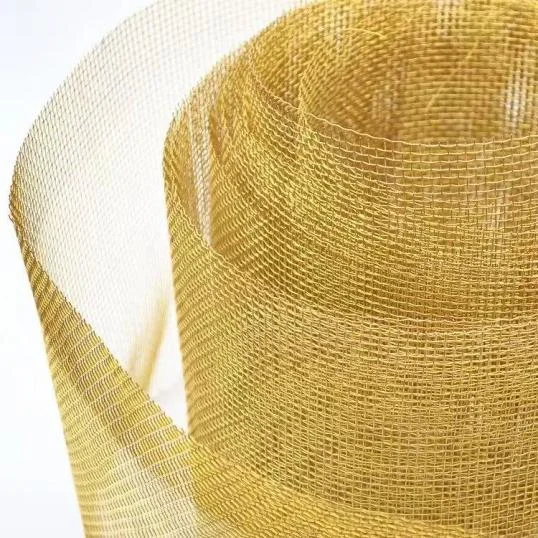
• Conductive Path Formation: The core principle of brass wire screen for electromagnetic shielding lies in its excellent electrical conductivity. Brass, an alloy of copper and zinc, forms a continuous conductive network through its wire structure. When electromagnetic waves encounter the screen, the conductive network creates a low-resistance path, allowing induced currents to flow along the wire surface instead of penetrating the shielded area. This current flow dissipates the electromagnetic energy as heat, reducing wave transmission.
• Aperture Size and Shielding Effectiveness: The aperture size of brass wire mesh screen directly impacts shielding performance. According to the electromagnetic shielding theory, the aperture must be smaller than the wavelength of the electromagnetic waves to be blocked—typically 1/10 to 1/5 of the wavelength for optimal effect. For example, brass wire mesh sheet with smaller apertures is required for shielding high-frequency microwaves, while larger apertures suffice for low-frequency radio waves. Hebei Xiangguang customizes aperture sizes based on specific shielding frequency requirements.
• Reflection and Absorption Synergy: brass wire screen achieves shielding through both reflection and absorption mechanisms. Most incident electromagnetic waves are reflected by the conductive brass surface, while a small portion is absorbed by the wire material and converted into thermal energy. This synergy ensures high shielding effectiveness (SE), usually measured in decibels (dB), with high-quality brass screens achieving SE values above 60 dB for most frequency ranges.
Performance Feature | Technical Advantages | Shielding Application Value | Comparison with Other Shielding Materials | Hebei Xiangguang Product Advantages |
Excellent Conductivity | Brass alloy (60-70% copper content) ensures high electrical conductivity, facilitating efficient induced current flow | High shielding effectiveness against a wide frequency range (10 MHz-10 GHz) | Superior to stainless steel screens; comparable to pure copper but with better mechanical strength | Precise copper-zinc alloy ratio; uniform wire conductivity; strict quality control for alloy composition |
Corrosion Resistance | Brass naturally forms a protective oxide film, resisting oxidation, moisture, and mild chemical erosion | Suitable for harsh environments (humid, industrial, outdoor) without compromising shielding performance | Better corrosion resistance than pure copper and iron screens; longer service life in adverse conditions | Optional surface passivation treatment; corrosion-resistant packaging; long-term durability testing |
Structural Versatility | Processable into brass wire mesh sheet, rolls, or customized shapes; adjustable wire diameter and aperture | Adaptable to diverse shielding scenarios (equipment enclosures, building windows, cable shielding) | More flexible than rigid metal plates; easier to install on irregular surfaces | Customizable dimensions and shapes; various weave patterns (plain, twill) for different needs |
Mechanical Strength | Brass alloy offers higher tensile strength and wear resistance than pure copper | Withstands mechanical handling, installation stress, and long-term use without deformation or wire breakage | Stronger than pure copper screens; more durable than non-metallic shielding materials (e.g., conductive fabrics) | Optimized wire drawing process; uniform wire diameter; reinforced edge treatment for brass wire mesh sheet |
• Alloy Composition: The copper content in brass directly affects conductivity and shielding performance. Higher copper content enhances conductivity but may reduce mechanical strength. Hebei Xiangguang precisely controls the copper-zinc ratio (typically 63/37 or 65/35) in brass wire screen to balance conductivity, strength, and cost, ensuring optimal shielding effectiveness.
• Wire Diameter and Aperture Size: Thicker wires and smaller apertures improve shielding effectiveness but may increase weight and reduce air permeability. For example, brass wire mesh screen with 0.15mm wire diameter and 0.2mm aperture offers higher SE than screens with 0.2mm wire and 0.3mm aperture. The company customizes these parameters based on the target frequency and application requirements.
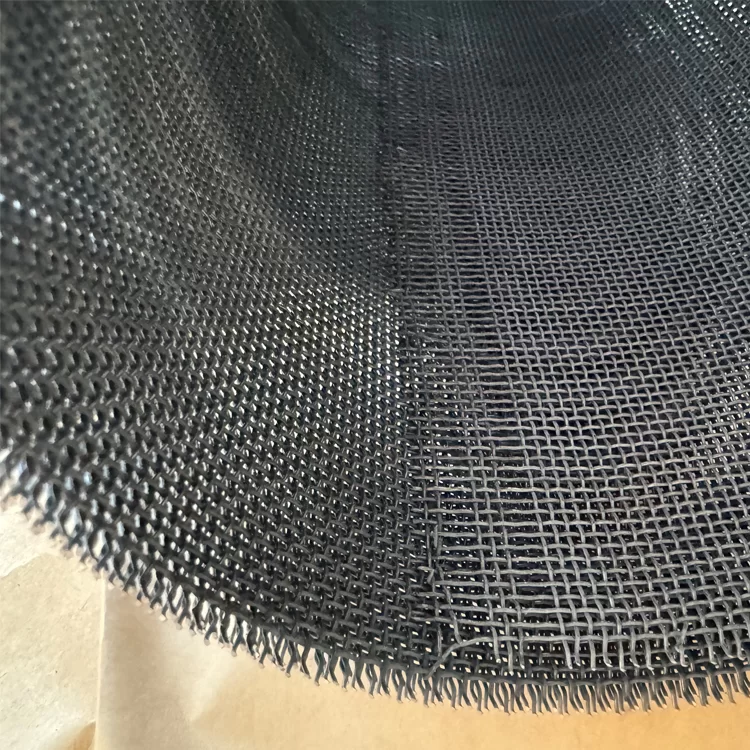
• Weave Pattern: Different weave patterns (plain weave, twill weave, Dutch weave) affect the conductive network density and structural stability. Plain weave is suitable for general shielding, while twill weave and Dutch weave provide higher density and better shielding for high-frequency applications. Hebei Xiangguang selects the optimal weave pattern for each brass wire mesh sheet based on shielding needs.
• Installation Sealing: Proper installation with tight sealing is crucial to prevent electromagnetic wave leakage through gaps. brass wire screen should be securely fastened and sealed at joints using conductive gaskets or adhesives. Hebei Xiangguang provides installation guidance to ensure full shielding integrity.
• Electronic Equipment Enclosures: brass wire mesh screen is widely used in enclosures for precision electronic equipment (e.g., medical devices, laboratory instruments, aerospace electronics). It forms a shielding barrier to prevent EMI from interfering with equipment operation and protect sensitive components from external electromagnetic radiation.
• Building and Room Shielding: In environments requiring strict EMI control (e.g., data centers, test chambers, military command centers), brass wire mesh sheet is installed on windows, walls, and ceilings. It creates a "Faraday cage" effect, isolating the indoor space from external electromagnetic waves and preventing internal signal leakage.
• Communication and Cable Shielding: brass wire screen is used as a shielding layer in communication cables (e.g., coaxial cables, Ethernet cables) to reduce signal interference and ensure stable data transmission. It also protects cable connectors and interfaces from EMI in industrial and outdoor environments.
• Automotive and Transportation: In automotive electronics (e.g., engine control units, infotainment systems), brass wire mesh screen shields sensitive components from electromagnetic noise generated by the engine and other electrical systems. It is also used in railway and aviation equipment to ensure reliable operation in high-EMI environments.
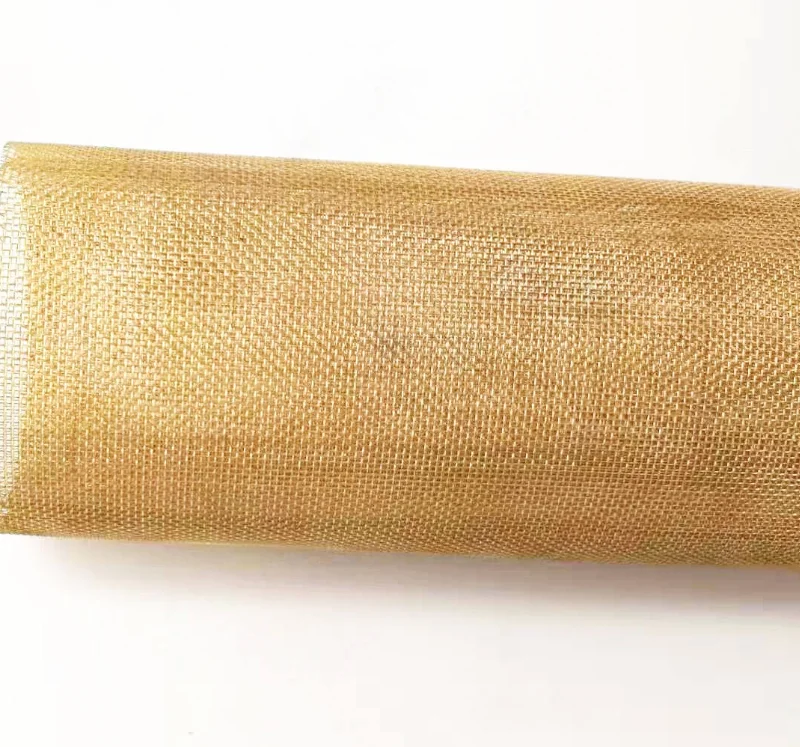
brass wire screen is suitable for electromagnetic shielding due to its unique combination of properties: 1) Excellent electrical conductivity from its copper content, enabling efficient reflection and dissipation of electromagnetic waves; 2) Good corrosion resistance, ensuring long-term performance in diverse environments; 3) Structural versatility, allowing customization into brass wire mesh screen or brass wire mesh sheet for different applications; 4) Balanced mechanical strength and ductility, facilitating easy processing and installation. These advantages make it a cost-effective and reliable shielding solution.
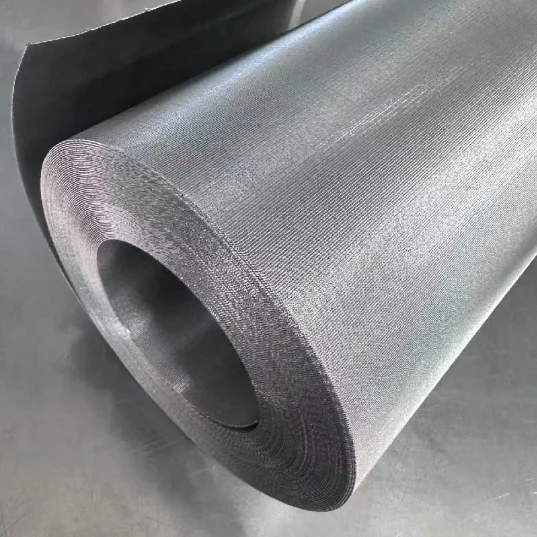
To choose the right brass wire mesh screen, focus on three key factors: 1) Target frequency: Smaller apertures (1/10 to 1/5 of the wave length) are required for high-frequency shielding. 2) Environment: Corrosion-resistant surface treatment is needed for humid/industrial environments. 3) Installation requirements: brass wire mesh sheet for rigid enclosures or rolls for large-area applications. Hebei Xiangguang’s technical team can recommend the optimal wire diameter, aperture, and weave pattern based on your specific shielding frequency and application scenario.
The shielding effectiveness (SE) of brass wire screen typically ranges from 40 dB to 85 dB for frequencies between 10 MHz and 10 GHz. For general electronic equipment shielding, SE values of 40-60 dB are sufficient. For high-precision applications (e.g., test chambers, military equipment), Hebei Xiangguang’s high-density brass wire mesh screen can achieve SE values above 60 dB, effectively blocking over 99.99% of electromagnetic waves.
To maintain long-term shielding performance: 1) Regularly clean brass wire screen with a soft cloth and mild detergent to remove dust and debris, avoiding abrasive cleaners that damage the surface. 2) Inspect for corrosion or wire breakage, especially in harsh environments; replace damaged sections promptly. 3) Ensure installation seals remain intact to prevent leakage. 4) Store unused brass wire mesh sheet in a dry, ventilated environment with moisture-proof packaging. Hebei Xiangguang provides detailed maintenance guidelines for different applications.
Yes, brass wire screen can be fully customized for special shapes and sizes. Hebei Xiangguang leverages 36 years of manufacturing experience to processbrass wire mesh screen into customized brass wire mesh sheet, curved panels, or irregular shapes to fit unique installation requirements (e.g., equipment enclosures, irregular windows). The company also customizes wire diameter, aperture size, and weave pattern to match specific shielding performance needs, providing one-stop customized solutions for customers.