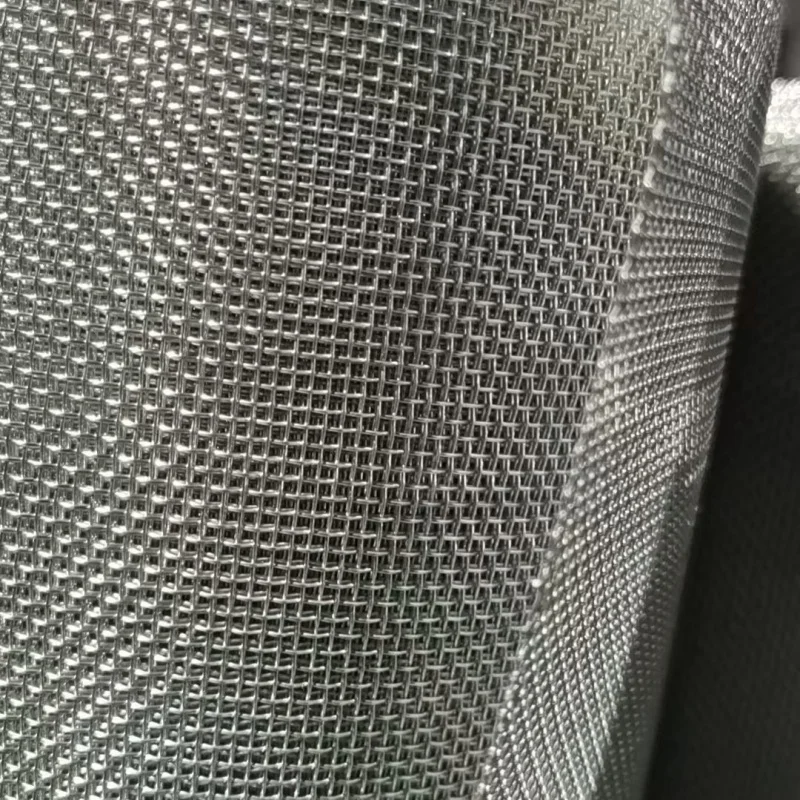
A window screen is one of those products nobody notices until it sags, rips or lets a mosquito through. When that happens, most people reach for a fibreglass replacement from the shelf. The more durable answer, and the one the window and door industry actually spec, is Aluminum wire mesh. It is light enough to frame, stiff enough to hold its shape, and it does not rust the way steel does in a damp sill. Aluminum also takes a powder-coat or anodised finish well, which is why you see it in coloured frames as often as in plain silver. This article covers how to choose it for windows, doors and awnings, and why it keeps outperforming the cheaper alternative.
The focus here is the practical side of buying aluminium mesh window screens: which alloy and weave to ask for, how aluminium compares with fibreglass in real service, how to read the open-area number so the screen still lets air move, and how to order it cut to size. The angle is a materials decision for window fabricators, screen suppliers and builders — not a sales pitch. Get the spec right and the screen becomes the part you fit once and forget.

Aluminium Mesh Window Screens That Fit and Keep Their Shape
aluminium mesh window screens owe their popularity to a simple balance: strength without weight. A frame screen fitted into a casement window sees constant opening and closing, wind pressure and sun; aluminium mesh window screens hold a crisp, flat surface where a softer mesh would stretch and sag. Because the aluminium is woven from drawn wire, the screen keeps its mesh count year after year instead of ballooning between frames. It also takes tension evenly across the span, so a screen on a large window stays flat rather than bowing in the middle.
There is also the corrosion side. Exposed to rain, condensation and salt air at the coast, a galvanised steel screen rusts and stains the frame. Aluminium forms a thin oxide layer that stops further attack, so the screen stays clean and grey-silver. For a coastal town or a humid kitchen, that means no brown streaks bleeding down the wall and no screen replaced every season.
Aluminium Fly Screen Mesh vs Fibreglass: What Holds Up
The most common comparison buyers make is aluminium against fibreglass. Fibreglass is cheaper and easier to roll, which is why it fills the DIY aisle. Aluminium Fly Screen Mesh answers the same job with better durability: it resists tears, does not yellow, holds tension in the frame, and survives repeated cleaning without fraying. The trade-off is price, and the honest calculation is lifetime cost — the aluminium screen is bought once, the fibreglass one twice as often. In a rental block or a coastal restaurant, that arithmetic decides the whole supply decision.
For a commercial job — a screen supplier stocking windows for a whole development — the case is even clearer. Aluminium Fly Screen Mesh cuts cleanly, edges hold without unraveling, and the finished screen looks uniform. The saving is not in the roll but in the call-backs you never make. That is the metric that matters when you are quoting a hundred windows, not one.
Aluminium Fly Screen Mesh Weave and Wire Diameter
Not all aluminium screens are the same, and the two numbers that decide performance are the weave and the wire diameter. Aluminium Fly Screen Mesh is woven in plain or twill patterns, and the count tells you how many openings there are per inch. A finer weave blocks tiny insects like midges but restricts airflow; a coarser weave breathes better and suits larger pests like flies and mosquitoes. Choose the count to match the pest, not the prettiest pattern. It is also worth matching an anodised screen to the frame, so the finished window looks like one product rather than a bolt-on.
Wire diameter matters because it sets stiffness. Thicker wire holds a larger frame without sagging; thinner wire rolls tighter and trims easier. Aluminium Fly Screen Mesh with a wire that is too light will bow in a wide window, so match the diameter to the span. Ask the supplier for both the mesh count and the wire diameter on the quote — a screen that is right on count but soft on wire will still look wavy by the end of the season.
Mosquito Mesh Roll for Windows, Doors and Awnings
For doors, sliding panels and awnings, contractors buy by the roll rather than by the piece, and a Mosquito mesh roll is the stock item. Mosquito mesh roll lets a fabricator cut screens to any opening without waste, and because it comes in standard widths it suits the common window and door frame sizes. One roll covers a kitchen door, a balcony slider and a pair of awning panels, so the ordering is simple and the job moves. Standard widths mean less wastage, and a standing stock lets you quote a lead time you can actually keep.
The edge is where a screen lives or dies. Mosquito mesh roll cut to size and edge-finished — crimped, welded or taped — holds its shape when framed, while a raw cut edge frays and lets the mesh unravel at the fixing points. A supplier who sells a Mosquito mesh roll with a clean, stable edge saves you the finishing work on site. It is the difference between a screen that fits and a screen that needs constant repairs.
Aluminium Fly Screen Mesh Open Areas for Airflow and Shade
Beyond blocking pests, a screen sits in the airflow path, so the open area decides how much the room breathes and how much shade it gains. Aluminium Fly Screen Mesh is made in a range of open-area percentages, and the number tells you how much air still passes after installation. In a south-facing window, the same mesh also cuts solar glare and heat gain, which is why homeowners treat the screen as part of the climate, not just the pest defence. In a hot climate the shading effect alone can cut the cooling load, which makes the screen a comfort upgrade as much as a barrier.
Read the open-area figure before you buy. A screen that drops open area too low starves the room and pushes the fan or AC to work harder; one with too much lets the smallest insects through. Aluminium Fly Screen Mesh with a mid-range count usually balances ventilation and protection, but the right figure depends on your climate and your pest. Ask for the number on the quote so you are comparing screens, not just prices.
That is the standard we build on at Hebei Xiangguang Metal Net Co., Ltd. Established in 1989 and based in Anping, Hebei — the heart of China's wire-mesh industry — we weave and finish Aluminum wire mesh, aluminium mesh window screens, fly screen mesh alongside our stainless, copper and brass/copper/bronze lines for more than three decades. We supply Mosquito mesh roll and cut-to-size panels, edge-finished and inspected before shipping, with mill certificates on request. Send us your mesh count, wire diameter and cut size today for a competitive quote — you are ordering from a supplier that has woven wire mesh for a living since 1989. We ship worldwide in rolls or pre-cut panels, and every batch is inspected before it leaves the factory floor.