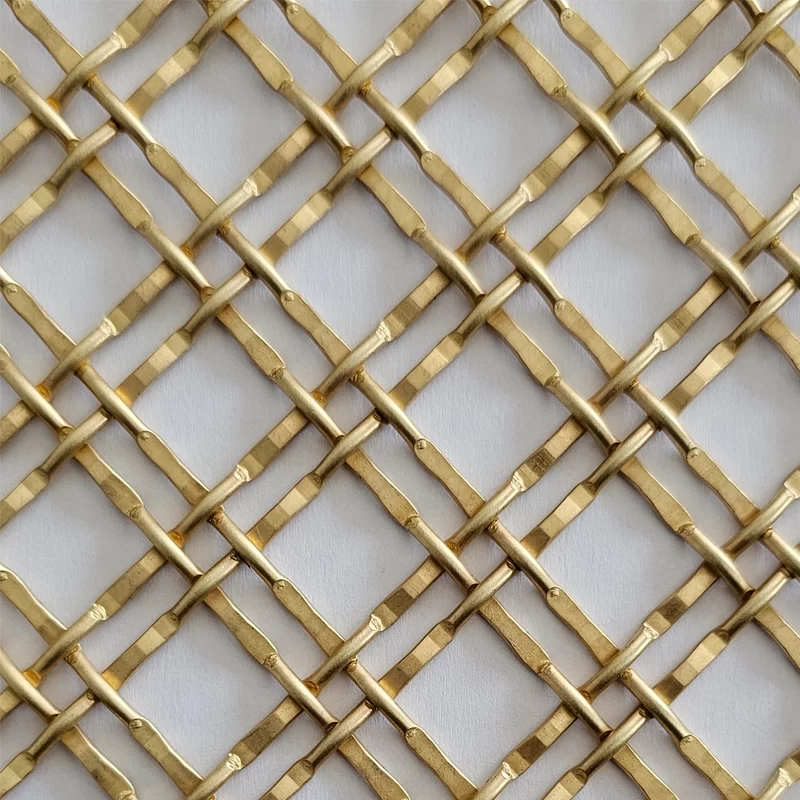
Most people shopping for metal filter discs assume the material does the work. It does not. Two discs in the same stainless grade, from two different factories, can behave completely differently in your line. The difference is rarely the metal. It is how the disc was built.
This piece walks through the three ways metal filter discs are actually made — woven layers, sintered blanks, and punched sheet — and what each one means for pressure drop, lifespan and cleanliness. It is aimed at the people who specify and buy, not the chemist at the bench. If you have ever ordered a disc by diameter alone, read on.
Online guides keep telling you to just buy sintered, as if the name settled it. What actually kills a filter project is buying a product you misread — a woven disc sold as sintered, or a micron rating that means different things to different factories. Sorting that out before you order is the whole game.

Where Stainless Steel Filter Discs Earn Their Keep
If most of your filtration is water, solvents, or light oils under moderate pressure, stainless steel filter discs are the workhorse you want. Woven from 304 or 316L wire, they give you cleanable, reusable media that shrugs off corrosion and handles backwashing without falling apart. They show up everywhere: pump strainers, spray nozzles, drain covers, and simple inline housings where a disposable cartridge would be overkill.
The catch is that a stainless steel filter disc only performs as well as the wire it was woven from. Cheap discs come from scrap-drawn wire with inconsistent mesh count; the openings vary across the face, so filtration is uneven and pressure drop creeps up. Ask a factory what wire they draw and whether the mesh count is checked per roll. The honest answer tells you more than the grade stamp ever will.
Two numbers matter once you pick woven stainless steel filter discs: open area and mesh count. Open area controls flow before pressure builds up; mesh count controls what particle stops. A disc too fine for the line starves the pump; one too coarse lets the contaminant reach the valve. Match the disc to the particle you actually need to stop.
What a Sintered Metal Filter Disc Does Differently
When you need rigidity, tight pore control, and the ability to flush a filter hard without it distorting, you move up to a sintered metal filter disc. Layers of fine mesh are compressed and bonded by heat and pressure into a single rigid sheet. There are no loose wires and no weave to unravel — the pores are fixed, uniform, and evenly spaced across the whole face. That makes it the standard for hydraulic, pneumatic and analytical filtration.
The practical difference is simple: a woven disc is a sieve you maintain, while a sintered disc is a controlled medium you calibrate. Sintered media also resists media migration — nothing sheds into your product stream — which is why food, pharma and semiconductor lines treat it as the default. You pay more, but you stop replacing discs and stop chasing contamination.
Thickness matters here more than on woven media. A thicker sintered metal filter disc is stiffer and resists differential pressure without bowing, keeping the seal intact. Thin blanks flex under backflush and let fluid sneak around the edge. If your line sees surge or repeated flushing, ask for a thicker blank.
Specifying the Right Sintered Metal Filter Disc
The one number that matters most is the micron rating, but it is easy to misuse. A sintered metal filter disc rated for 20 micron holds particles at 20 micron in a controlled way, while a woven disc at the same number might only mean the opening size on the wire. Match the rating to the duty, not to the cheapest option in the catalogue:
Micron Rating | Typical Application |
100–500 µm | Pre-filtration, coarse solids removal, pump and nozzle protection |
25–100 µm | Fine liquid filtration, hydraulic circuits, chemical dosing lines |
5–25 µm | Precision filtration, food and beverage polishing, gas filtration |
1–5 µm | High-purity and sterilization-grade filtration, analytical systems |
Specify the diameter, thickness, micron rating, and media type in writing. Do not assume the same micron means the same thing across suppliers — ask for the test method. A factory that shows you a cut chart and a pore-size report gives you the one thing that controls your result.
Porosity is the second lever: a porous sintered disc flows better but cuts slightly less, while a denser one filters better but chokes sooner. Balance the two against your available pressure drop, and state the operating temperature.
Why Stainless Steel Mesh Discs Beat Loose Weave for Repeat Duty
If your application keeps a filter in service for years rather than days, stainless steel mesh discs are usually the smarter call than loose woven cloth. The difference is the edge. A plain cut of woven cloth frays at the rim, sheds wire, and shifts inside its housing. A proper mesh disc is edged — welded, crimped, or fused — so the weave holds shape through cleaning and backwashing without shedding filaments.
That edge treatment is also where quality shows. Look at the rim under light: a clean, even edge means the disc was finished properly. Rough or hairy edges mean it was punched fast and shipped fast, and you will be replacing it sooner. For any disc that gets cleaned and reused, the edge is worth more than the weave.
Diameter tolerance is the quiet killer — two discs with the same printed size can differ by fractions of a millimetre and decide whether the gasket seals. Confirm the outside-diameter tolerance in writing when you order stainless steel mesh discs for a fixed housing.
How to Specify a Sintered Metal Disc So the Job Is Done in One Order
A sintered metal disc fails in one of two ways: it is underspecified, or it is overspecified. Underspecifying means you order by outer diameter and hope, then fight pressure drop and contamination later. Overspecifying means paying analytical-grade prices for a pump strainer that needed a coarse woven disc. Both mistakes cost the same thing — money and downtime.
Write down the four numbers before you ask for a quote: diameter, thickness, micron rating, and media type. Then ask two questions: how is the pore size verified, and can you supply cut-to-size blanks without a minimum that kills small projects. A supplier who answers both without hedging is one you can build a repeat order around.
Ask about sample and lead time up front. Can the factory send a sample disc at your exact micron, and how long does a repeat order take? A sintered metal disc you cannot reorder before maintenance week is worthless. Stocked media and predictable lead times keep your line running, not the lowest price.
That is the standard we hold at Hebei Xiangguang Metal Net Co., Ltd. Established in 1989 and based in Anping, Hebei — the historic heart of China's wire-mesh industry — we have spent more than three decades weaving and finishing stainless steel, alloy and brass/copper/bronze wire cloth. We make metal filter discs and stainless steel mesh discs cut and edged to your dimensions, and sintered media blanks built to a verified pore rating, with every batch checked before it ships. If you are sourcing filter discs for a new project or a replacement line, send us your diameter, micron and volume today for a competitive quote. With our history, capacity and quality control behind it, you are ordering from a factory that has done this for a living since 1989.