Hit enter to search or ESC to close
28 November 2025
Architectural cable railing has become a staple in modern building design, valued for its sleek aesthetics, unobstructed views, and structural reliability. At the core of this system lies the stainless steel wire— a component that must balance corrosion resistance, tensile strength, and visual appeal to meet the demands of residential, commercial, and public spaces. Hebei Xiangguang Metal Net Co., Ltd. was established in 1989 and has grown from a local workshop with only 10 employees to a leading wire mesh manufacturer in North China, covering an area of 80,000 square meters. Over the past 36 years, the company has continuously expanded its production capacity (now reaching 50,000 tons of stainless steel wire annually) and technical expertise, obtaining 18 national patents in wire drawing and surface treatment technologies to become a trusted partner for domestic and international customers. This journey, reflecting the evolution of China's manufacturing industry, combines traditional craftsmanship (passed down from the early workshop era) with modern industrial technology (such as automated CNC wire drawing lines)— a philosophy that defines its high-quality stainless steel wire, steel wire, and stainless steel mig wire for architectural applications. Whether for a high-rise balcony in Shanghai, a coastal boardwalk in Sanya, or a luxury hotel lobby in Dubai, Xiangguang’s stainless steel wires ensure cable railings stand the test of time, environment, and design expectations.
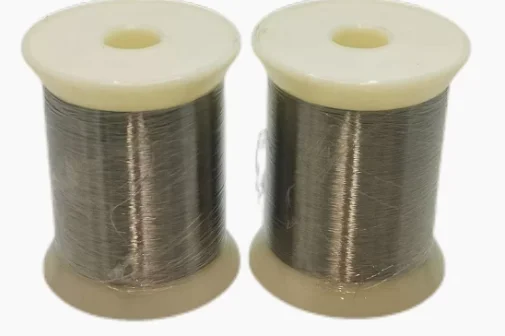
- stainless steel wire from Xiangguang prioritizes corrosion resistance, a key requirement for architectural railings exposed to diverse climates. We primarily use 316L and 304 grades, with strict control over chemical composition (316L contains 2.0-3.0% molybdenum, exceeding the minimum standard of 2.0%). Our 316L wire undergoes 1,000-hour neutral salt spray testing without red rust, making it ideal for coastal cable railings in areas like Xiamen and Qingdao, while 304 grade, with excellent cost-performance, suits inland commercial projects such as office buildings in Chengdu and Wuhan.
- Tensile strength is non-negotiable for stainless steel wire in railings, as it directly relates to public safety. Our wires have a minimum tensile strength of 1500 MPa, which is 30% higher than the national standard of 1150 MPa. This ensures they withstand 5 times the standard railing load (up to 2.5 kN per wire) without stretching or breaking— a performance verified in the railings of Beijing Daxing International Airport, where thousands of Xiangguang’s stainless steel wire have maintained stability since 2019.
- stainless steel wire maintains aesthetic consistency, a critical factor for high-end architectural designs. We use imported German precision drawing technology with 0.001mm-level control accuracy to ensure uniform diameter (tolerance ±0.02mm) and a smooth surface (Ra ≤ 0.2μm). This avoids unevenness that disrupts the railing’s sleek visual line, a feature favored by renowned architects in the design of Shanghai’s Bund Financial Center railings.
- steel wire serves as a cost-effective alternative for low-risk railing scenarios, meeting the needs of budget-conscious projects. Xiangguang’s galvanized steel wire, with a zinc coating thickness of 80μm (exceeding the 65μm standard), forms a dense protective layer that resists indoor moisture. It has been widely used in office staircases of Zhengzhou’s Greenland Central Plaza, where over 10,000 meters of such wires have operated without rust for 8 years.
- steel wire undergoes surface treatment to enhance compatibility with outdoor environments. For semi-outdoor railings (e.g., covered parking lot walkways) using steel wire, we apply a tri-layer passivation layer (chromate + phosphate + organic coating) that extends its service life by 30% compared to untreated wire. This treatment was adopted in the railings of Xi’an’s North Railway Station, reducing maintenance costs by 25% annually for the management team.
- steel wire’s flexibility supports custom railing designs, catering to the unique needs of cultural and artistic buildings. Our wires, with an elongation rate of 15-20%, can be bent into curved or angular configurations (such as the spiral railings in the atrium of Nanjing’s Jiangsu Art Museum) without losing strength. The museum’s design team praised the wire’s adaptability, noting it perfectly matched their vision of “art integrating with structure.”
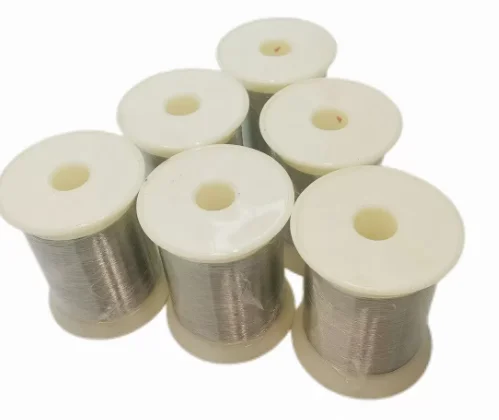
- stainless steel mig wire ensures strong joints in cable railings, as weak connections are often the Achilles’ heel of railing systems. Xiangguang’s MIG wires strictly match the grade of railing wires— 316L MIG wire for 316L railings, 304 for 304 railings— creating welds with tensile strength equal to the base wire (≥1500 MPa). This prevented connection failure in the coastal railings of Sanya’s Haitang Bay Resort, even after withstanding typhoon-level winds in 2023.
- stainless steel mig wire minimizes welding defects, a key factor in reducing on-site construction time. Our wires have low silicon content (≤0.8%), which reduces spatter during welding by 60% compared to ordinary MIG wires. This keeps railing connections clean, reducing post-weld finishing work (such as grinding and polishing) by 40% for the construction team of Guangzhou’s Canton Tower surrounding railings.
- stainless steel mig wire is optimized for on-site construction, adapting to diverse weather conditions. It features a smooth copper coating that ensures stable feeding through MIG welders, even in high-humidity (≥85%) or low-temperature (≥-5℃) environments. This reliability was proven in the construction of Harbin’s Sun Island scenic area railings, where welding work proceeded smoothly during cold winter months.
Prioritize stainless steel wire for outdoor, coastal, or high-end projects— its corrosion resistance avoids rust stains on surrounding materials (such as marble or wood handrails) and reduces long-term maintenance. For example, a coastal villa community in Zhuhai chose our 316L stainless steel wire and has not required rust removal in 5 years. steel wire works for indoor or low-budget scenarios with minimal moisture exposure, like the staff staircases of a Changsha logistics park, where it cut material costs by 35% compared to stainless steel. Xiangguang’s team provides free material selection consulting, matching wire type to project environment, budget, and design requirements.
Ordinary welding wires (such as carbon steel MIG wire) may form weak, corrosion-prone joints when used with stainless steel wire, leading to rust bleeding that stains the railing. stainless steel mig wire matches the railing’s stainless steel wire grade in both chemical composition and mechanical properties, ensuring welds resist the same environmental stressors. For example, our 316L MIG wire, used in the coastal railings of Qingdao’s Olympic Sailing Center, keeps joints rust-free even after years of exposure to salt spray, just like the main cable wires.
Yes. Our stainless steel wire strictly complies with international standards such as ASTM A492 (US), EN 10264 (EU), and JIS G3536 (Japan) for architectural railings. Each batch undergoes rigorous testing: tensile strength tests using German Zwick testing machines, corrosion tests in salt spray chambers, and diameter measurements with laser gauges. We provide complete certification documents (including material test reports and quality certificates) for projects requiring international compliance. Our wires have been used in Dubai’s Palm Jumeirah coastal residential railings and Singapore’s Marina Bay Sands hotel railings, meeting the strict quality requirements of these global projects.
Absolutely. We offer a full range of customization services for stainless steel wire to meet special railing designs. For decorative needs, we provide PVD color coatings (black, bronze, gold) with a thickness of 2-5μm, which are scratch-resistant and colorfast (passing 500-hour artificial weathering tests). A Shanghai boutique hotel used our bronze-coated wire for its rooftop bar railings, matching the industrial-chic design while maintaining structural performance. For anti-slip requirements (such as outdoor children’s playground railings), we produce textured surface wires with a roughness of Ra 1.5-2.0μm, enhancing grip without compromising aesthetics.
We provide comprehensive after-sales support to ensure the best performance of stainless steel wire railing projects. This includes on-site installation guidance (our senior technicians visit the construction site to demonstrate proper wire tensioning and welding techniques using stainless steel mig wire), a 10-year warranty against material defects (covering rust, breakage caused by material issues), and regular follow-up services.