Hit enter to search or ESC to close
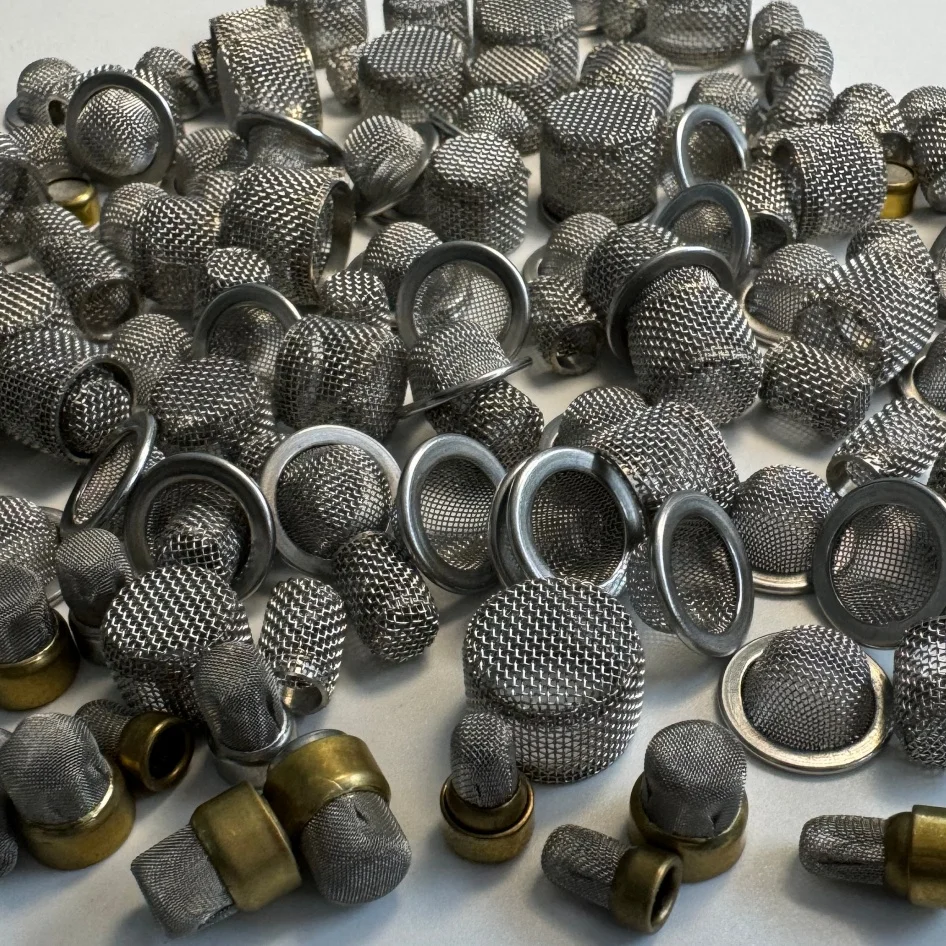
Stainless Steel Mesh Filter Cap Price Comparison and Procurement Guide

Procurement managers in chemical, food, and industrial sectors establish uniform cost baselines when evaluating Stainless Steel Mesh Filter Cap options across available material grades and application environments. Standardized financial baselines require identical commercial comparison parameters for quantity, delivery schedules, and warranty terms.
Pricing tiers, component lifespan metrics, and waste percentages remain unprovided by manufacturers. Empirical performance metrics must be collected directly from suppliers rather than relying on unverified assumptions.
Financial baselines for Stainless Steel Mesh Filter Cap procurement require matching identical parameters across designated material options. Stainless Steel 304, 304L, 316, 316L, and special alloys form the sole material scope for these evaluations.
Pricing tiers, loss rates, and replacement frequencies remain completely unprovided by manufacturers. Direct vendor inquiries establish unit economics while awaiting supplier documentation.
Uniform financial comparisons depend strictly on explicit parameters gathered during formal supplier engagement. Documenting the total absence of baseline cost data prevents premature financial modeling based on unverified pricing assumptions.
Pipelines and equipment vents, instruments and sensors, and liquid systems are mapped directly against Stainless Steel 304 and 304L options without assuming unverified corrosion thresholds.
Industrial sectors spanning chemical, food, and industrial fields incorporate spraying and nozzle systems as well as building and ventilation systems into the operational boundary.
Wastewater treatment, marine, and offshore equipment deploy special alloys alongside 316 and 316L grades based strictly on physical site layouts.
Mechanical strength and specific resistance ratings remain unprovided by manufacturers, requiring direct site verification before final integration takes place.
Aligning material options against operational sectors requires direct correlation between specified alloy grades and designated application environments. Procurement teams evaluate Stainless Steel 304, 304L, 316, 316L, and special alloys across industrial fields.
| material | application |
|---|---|
| Stainless Steel 304 | Pipelines & Equipment Vents |
| 304L | Instruments & Sensors |
| 316 | Liquid Systems |
| 316L | Spraying & Nozzle Systems |
| special alloys | Food & Pharmaceutical Applications |
| Stainless Steel 304 | Building & Ventilation Systems |
| 316L | Wastewater Treatment, Marine & Offshore Equipment |
Documentation gaps regarding missing testing standards are identified directly within the matrix without inventing compliance proofs. Procurement officers record incomplete records as pending vendor input.
Chemical, food, and industrial sourcing managers formulate precise inquiry fields to govern incoming supplier proposals. Commercial variables remain pending until responding vendors submit discrete entries for evaluation.
Exact quotation templates capture numeric counts, designated part models, physical dimensions, flow capacities, minimum order requirements, warranty terms, and scheduled lead times. Unverified performance claims, safety assurances, and lifespan estimates are entirely excluded from these inquiry frameworks to preserve strict analytical objectivity.
Procurement teams structure formal data capture sheets around specific operational requirements across target sectors.
Structured inquiry templates prevent ambiguity during supplier selection.

Financial accountability depends strictly on separating verifiable commercial terms from unprovided manufacturer data.
Total expenditure models separate contractual commitments from missing design values. Verified commercial parameters dictate initial purchase disbursements, while unprovided metrics remain pending direct vendor communication.
Manufacturer-supplied pricing tiers, loss rates, and replacement frequencies are completely absent from current documentation.
Certified testing methods, material density values, and thermal ratings are absent from the technical files.
Unlisted performance metrics are treated as pending verification rather than assumed risks. Evaluation boundaries remain anchored strictly to the provided material options.
Summarizing documentation gaps requires tracking missing certification numbers, issuing bodies, and customs clearance proofs across all responding manufacturing entities.
Direct communication protocols are deployed to gather unlisted operational parameters for Stainless Steel Mesh Filter Cap procurement. Requests target missing physical dimensions and discrete minimum order quantity thresholds directly from responding commercial channels.
Evaluations proceed strictly through supplied material lists and application contexts without supplemental assumptions regarding operating limits.
Application environments span chemical, food, and industrial sectors without assuming unverified corrosion thresholds.
Plant environments span chemical processing, food handling, and general industrial sectors. Operations involve gas venting, measurement instrumentation, fluid transport loops, aerosol dispersion, hygiene-sensitive zones, air ventilation networks, and offshore marine installations.
Evaluators align delivery schedules and warranty terms directly with requested order volumes and destination ports. Unit expenditures vary according to the exact commercial commitments negotiated in each purchasing contract.
The final financial commitment depends on raw material market fluctuations linked to the specific grade selected. Procurement personnel must calculate expenditure per unit based on the exact alloy composition required for the operating site.
Empirical density numbers, pressure ratings, and thermal endurance limits remain unsupplied in the current documentation. Sourcing directors must verify these physical attributes through direct technical inquiries prior to installation.
Official certification numbers, issuing bodies, and customs clearance documents are completely omitted from the current file package. Buyers must request these compliance records independently based on local regulatory requirements.
A formalized inquiry list must be compiled using only Stainless Steel 304, 304L, 316, 316L, and special alloys.
Purchase commitments remain withheld until direct written confirmation resolves all documentation gaps across application environments including Pipelines & Equipment Vents, Instruments & Sensors, Liquid Systems, Spraying & Nozzle Systems, Food & Pharmaceutical Applications, Building & Ventilation Systems, and Wastewater Treatment, Marine & Offshore Equipment.
Nov 11, 2026
How Architectural Mesh Combines Security, Functionality, and Modern Building Design
As the global construction industry continues to evolve, international buyers are paying increasing attention to materials that combine technical performance with modern architectural design. Professional industry exhibitions and specialized wire mesh trade events provide an important platform for manufacturers, architects, contractors, and distributors to explore new material technologies and identify reliable partners.
Nov 09,26
Why Stainless Steel Wire Mesh Is Becoming a Preferred Choice for Modern Security Applications
The Canton Fair has long served as an important platform connecting manufacturers, distributors, and industrial buyers from around the world.
Nov 06,26
Sydney Build Expo 2026: Stainless Steel Wire Mesh Solutions for Global Building Projects
As global construction markets continue to evolve, international buyers are paying greater attention to building materials that combine durability, safety, functionality, and architectural value. From large-scale commercial developments to residential projects and infrastructure construction, material selection is becoming an important part of long-term project performance.
If you are interested in our products, you can choose to leave your information here, and we will be in touch with you shortly.