Hit enter to search or ESC to close
28 November 2025
Electromagnetic interference (EMI) and radio frequency interference (RFI) pose severe threats to the stability of electronic equipment, disrupting signal transmission in communication devices and distorting test data in laboratory instruments. Copper mesh, with its excellent electrical conductivity and flexible formability, has become the core material for EMI/RFI shielding in electronic enclosures, balancing protection performance and cost-effectiveness. Hebei Xiangguang Metal Net Co., Ltd. was established in 1989 and has grown from a local workshop to a leading wire mesh manufacturer in North China. Over the past 36 years, the company has continuously expanded its production capacity (now producing 8,000 tons of specialized copper mesh annually) and technical expertise, obtaining 22 national patents in mesh weaving and surface treatment to become a trusted partner for domestic and international customers. Our journey reflects the evolution of China's manufacturing industry, combining traditional craftsmanship (such as hand-weaving techniques for fine-mesh products) with modern industrial technology (including fully automated CNC weaving lines)—a philosophy that defines our high-quality copper mesh, copper mesh for mice, and copper screen wire across diverse applications. Whether for 5G communication base stations, biomedical laboratories, or industrial control cabinets, Xiangguang’s copper mesh ensures electronic enclosures remain shielded from interference, safeguarding equipment performance.
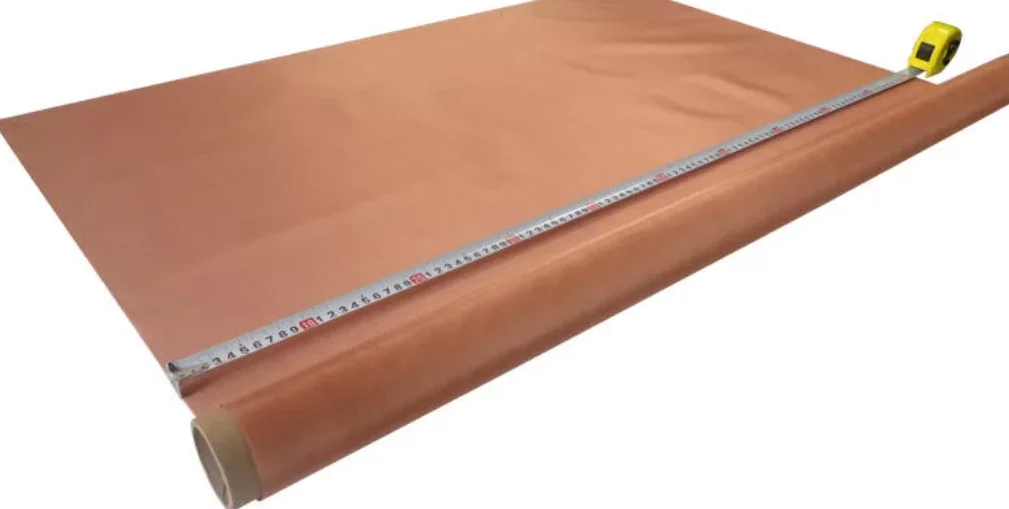
- Copper mesh delivers exceptional EMI/RFI shielding efficiency. Our 100-mesh brass copper mesh achieves shielding effectiveness of 85-100 dB across 30 MHz-10 GHz, exceeding the IEC 61340 standard for electronic enclosures, making it ideal for sensitive communication equipment.
- Material purity enhances copper mesh shielding stability. We use 99.9% pure copper or 70/30 brass alloys, minimizing electrical resistance and ensuring consistent signal blocking—critical for laboratory instruments that require precise data collection without interference.
- Copper mesh adapts to diverse enclosure structures. Our flexible mesh can be cut, bent, or bonded to irregular enclosure surfaces (such as curved communication device casings), maintaining 100% coverage without compromising shielding integrity.
- Copper screen wire diameter and mesh size are tailored to shielding needs. For high-frequency RFI (above 5 GHz), we use 0.05mm copper screen wire woven into 200-mesh products, while 0.1mm wire for 50-mesh mesh suits low-frequency EMI in industrial enclosures.
- Copper screen wire undergoes anti-tarnish treatment. Our electroplated tin or nickel coating prevents oxidation, ensuring the screen wire maintains conductivity for over 10 years in indoor electronic enclosures, reducing replacement frequency.
- Precision weaving of copper screen wire eliminates shielding gaps. Using German-origin looms, we control mesh uniformity with a tolerance of ±1 mesh, avoiding weak points that could leak electromagnetic signals—verified in 5G base station enclosure projects.
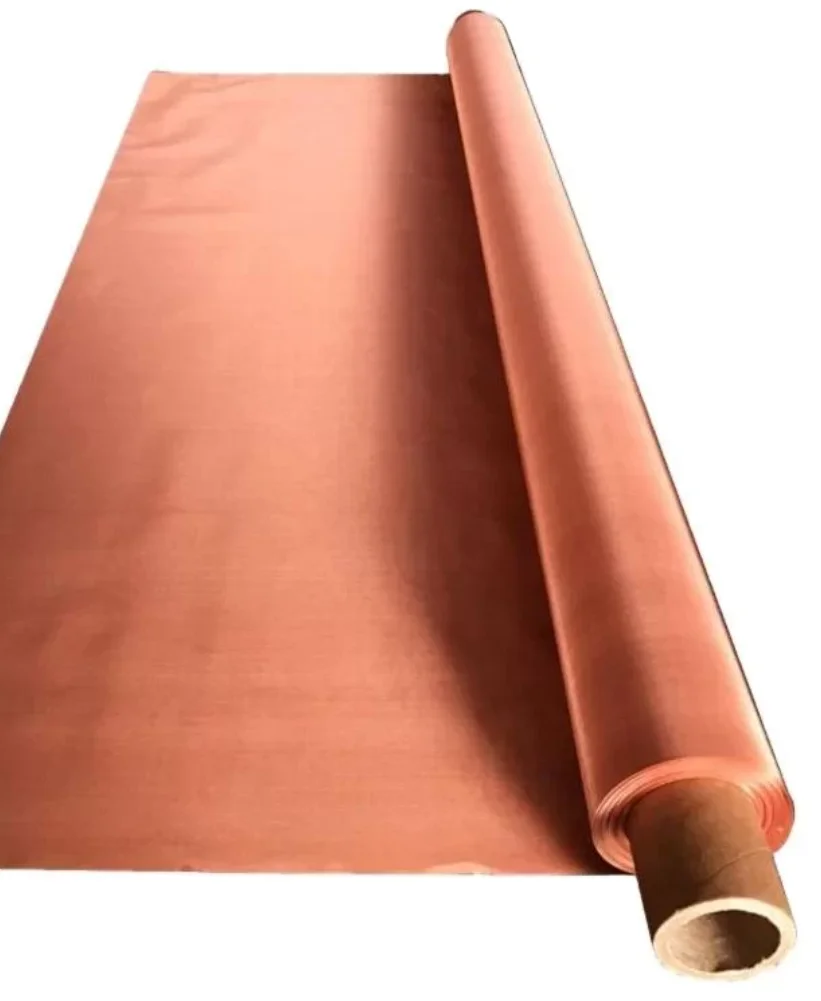
- Copper mesh for mice integrates EMI shielding and physical protection. In outdoor electronic enclosures (e.g., street lamp control boxes), it blocks both rodents (preventing wire chews) and EMI, serving dual purposes for rural communication equipment.
- Copper mesh for mice retains shielding performance while enhancing durability. The 0.2mm thick wire used in anti-rodent mesh maintains 60-80 dB shielding effectiveness, making it suitable for warehouse-mounted electronic monitoring enclosures.
- Copper mesh for mice is easy to install with shielding enclosures. Its rigid structure allows direct attachment to enclosure frames, combining seamlessly with foam gaskets to create a comprehensive protection system—adopted by a Hebei telecommunications operator.
For laboratory instruments (1-10 GHz), choose 100-150 mesh copper mesh with 0.08mm wire to balance shielding (≥90 dB) and airflow. For communication enclosures (10-30 GHz), 200-mesh mesh with 0.05mm wire is ideal. Xiangguang provides free sampling to test shielding efficiency for specific scenarios.
copper screen wire has 40% higher conductivity than aluminum, ensuring stronger signal reflection. It also resists corrosion better—our tin-plated copper screen wire survives 500-hour salt spray tests, while aluminum wire oxidizes in 100 hours, losing shielding ability in humid enclosures.
Yes. We modify copper mesh for mice with heat-resistant brass alloy (containing 1% manganese), which maintains structural stability and shielding performance at temperatures up to 200℃. It’s used in a Shandong steel mill’s control enclosures, enduring high-heat environments without deformation.
Absolutely. Our copper mesh complies with ASTM B98 (US) and BS EN 10250 (EU) standards. Each batch passes shielding tests via anechoic chambers, with reports provided for projects like Dubai’s 5G infrastructure and Singapore’s biomedical labs, meeting global certification requirements.
Avoid scratching the anti-tarnish coating—clean with a dry cloth instead of water. For outdoor enclosures, inspect copper mesh annually; Xiangguang offers on-site maintenance, including re-plating tarnished areas and tightening loose mesh, extending service life by 5-8 years.