Hit enter to search or ESC to close
1 December 2025
For factories and long-term buyers, bulk steel wire is more than just a raw material—it's the foundation of stable, high-volume production. Whether the needs come from weaving mesh plants, medical equipment workshops, or textile manufacturers working with protective fabrics, bulk supply ensures that production does not stop due to material shortages. Large-scale procurement means consistent diameter, surface smoothness, and tensile strength, all of which are essential for automated machinery.
Modern production lines—from filtration system builders to medical component manufacturers—rely on bulk steel wire because it provides predictable results. Stainless steel wire is manufactured from high-quality stainless steel, offering excellent corrosion resistance, durability, and strength. With wire diameters ranging from 0.025 mm to 1.00 mm, and available in multiple grades and finishes, it is widely used in weaving wire mesh, filtration, protective fabrics, braiding, medical devices, and various industrial applications.
For mesh-producing factories, bulk orders guarantee uniform weaving and reduce the risk of wire breakage. For medical device suppliers, bulk wire ensures that every batch meets hygiene and precision standards. Textile companies use bulk steel wire to blend into high-strength fabrics, improving resistance to cutting, heat, and abrasion. This is why procurement managers prefer stable, long-term bulk cooperation—they can secure quality, cost, and supply all at once.
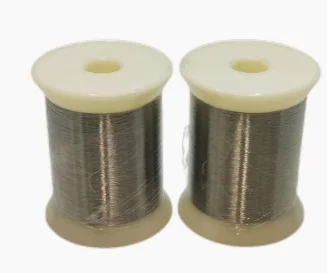
When industrial buyers compare different steel wire types, they evaluate how well each type fits into their specific production conditions. For example, high-tensile types are widely used in filtration frames, conveyor belts, and structural mesh where the wire must endure stress and vibration. Softer types are chosen for weaving applications in textile factories because they reduce machine wear and maintain smooth movement through looms.
In medical environments, ultra-thin precision types are essential. Factories that manufacture surgical mesh, guidewires, and catheter reinforcement use extremely fine wire that demands perfect surface finish and accuracy. Steel wire types also differ by hardness, tensile behavior, and corrosion resistance. Each variation serves a different role, giving engineers the flexibility to match their equipment and production goals.
A lot of factories rely on these types because they help maintain product consistency. A filtration plant may run 24 hours, requiring wire that holds its shape even under repeated pressure washing. A textile factory needs wire that blends smoothly with synthetic fibers without causing damage to machinery. Procurement decisions around steel wire types are therefore critical for production efficiency and long-term cost control.
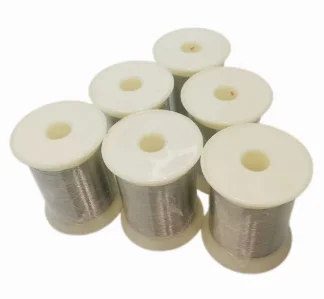
The demand for different types of stainless steel wire continues to rise because industries increasingly depend on materials that can tolerate heat, chemicals, tension, and long usage cycles. Stainless steel wire remains one of the few materials capable of meeting all these needs at once.
In industrial sectors, stainless steel wire is used to produce woven mesh for chemical filtration, gas separation, processing screens, and conveyor filters. These wire types offer uniformity and resistance to rust, which is essential for factories operating in wet or high-temperature environments.
In medical engineering, ultra-fine stainless steel wire supports components such as braided tubes, surgical sutures, precision springs, orthopedic mesh, and minimally invasive instruments. Medical plants rely on stainless steel wire because it maintains strength while offering a clean, non-reactive surface suitable for sterile conditions.
In textiles, stainless steel micro-wire is blended into protective clothing, fire-resistant fabrics, and anti-cut gloves. It adds durability and insulation without making the fabric too heavy. The flexible but strong nature of stainless steel wire allows textile factories to design materials that protect workers in industrial environments.
These stainless steel wire types help multiple industries achieve stable output, reliable performance, and internationally compliant product standards.
Factories value stainless steel wire because it performs reliably even in harsh working conditions. Whether woven into mesh, used in precision medical tools, or blended into textile structures, it remains consistent in shape and quality.
In industrial operations, stainless steel wire supports the production of filtration equipment, separation screens, springs, cables, and automotive components. Its ability to resist corrosion ensures long service life, even when exposed to liquids, chemicals, and high temperatures. Machine operators also appreciate its smooth surface, which reduces machine downtime and prevents jamming.
In medical fields, stainless steel wire meets strict hygiene standards. It is used in guidewires, catheter reinforcement, orthopedic frames, surgical mesh, and precision springs for medical devices. Manufacturers rely on its dimensional stability, which is essential when producing components that must function accurately inside the human body.
In textile manufacturing, stainless steel wire is blended with fibers to produce protective fabrics that are cut-resistant, heat-resistant, and durable enough for industrial safety gear. These textiles are widely used in factories, construction sites, and environments requiring high levels of protection.
By offering diameters from 0.025 mm to 1.00 mm, stainless steel wire supports a wide spectrum of applications, allowing engineers, medical designers, and textile developers to customize their final products with confidence.
Main industries include mesh weaving, filtration manufacturing, medical device production, and protective textile manufacturing.
They evaluate hardness, tensile strength, corrosion resistance, diameter precision, and machine compatibility.
Because industrial, medical, and textile applications require different strength levels, flexibility, and corrosion resistance.
Yes. It offers a clean surface, durability, and stability required for surgical tools, mesh, and guidewire components.
Visit the supplier’s website, contact their sales team, request samples, or place bulk orders tailored to your factory’s production schedule.