Why Product Selection Matters for Nickel Wire Mesh
High purity nickel wire mesh is not a commodity item. The same mesh count can perform very differently depending on wire diameter, weave pattern, and the chemical or thermal conditions it faces. Buyers who select solely on price or mesh number risk mismatches that shorten service life, increase maintenance costs, or cause component failure. This guide structures the decision around the factors that matter most in real purchasing situations.
Understanding the Key Specifications
1. Mesh Count and Opening Size
Mesh count (meshes per linear inch) directly controls the aperture—the open space through which fluid, gas, or particles pass. A higher mesh count means finer openings and finer wire; a lower count means larger openings and heavier wire.
Hebei Xiangguang Metal Net Co., Ltd. offers a range from 10 to 500 mesh, covering everything from coarse industrial screens to ultra-fine filtration cloth used in pharmaceutical and electronics applications. When specifying opening size, confirm both the mesh count and wire diameter, because the same mesh count can be achieved with different wire diameters, yielding different open-area percentages.
2. Wire Diameter
Wire diameter affects mechanical strength, open area, and flexibility. The available wire diameter range is 0.05 mm to 2 mm. Thinner wires (0.05–0.2 mm) suit precision filtration, electronic shielding, and medical devices, where low mass and fine apertures are required. Heavier wires (0.5–2 mm) are preferred for structural screens, catalyst supports, and high-stress industrial filters where durability under load matters more than fine separation.
3. Purity Level: ≥98% vs. ≥99.5% Nickel
Nickel purity directly affects corrosion resistance and conductivity. Two grades are available:
- ≥98% Ni — suitable for general industrial filtration, heat-resistant screens, and applications where minor impurities are acceptable.
- ≥99.5% Ni (total impurities typically <2%) — required for aerospace, medical, and precision electronic applications where consistent conductivity, zero-defect assembly, and ultra-low corrosion rates are non-negotiable.
Quality assurance includes strict purity testing to ≥99.5% Ni for premium-grade mesh, ensuring consistent performance in corrosive environments.
4. Weave Type
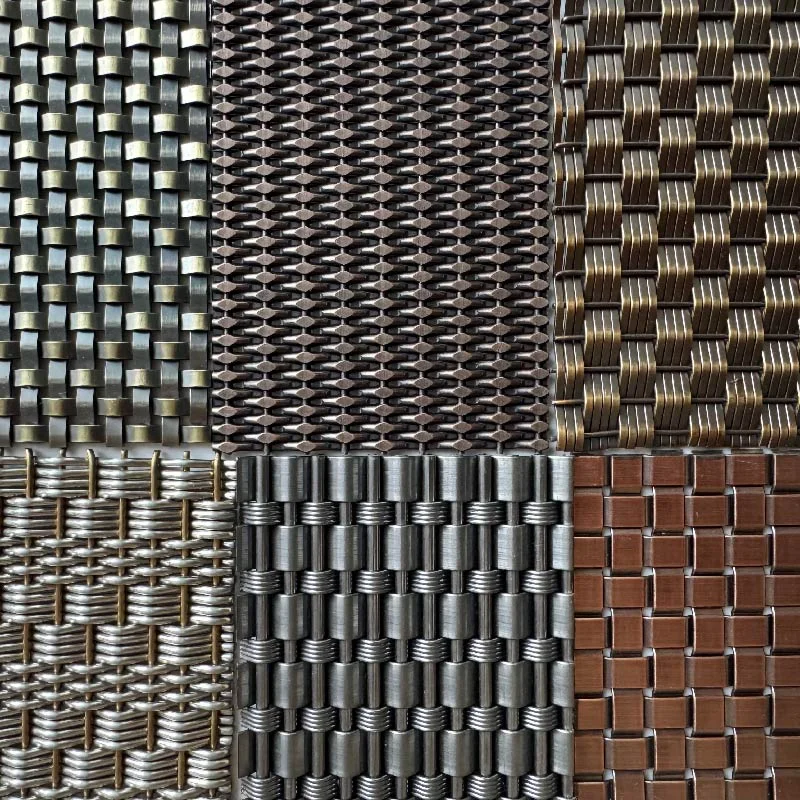
Three weave types are available: plain, twill, and Dutch twill.
5. Maximum Width and Cutting Tolerance
Standard maximum roll width is up to 1,200 mm. For custom components, precision 2D cutting is available with a tolerance of ±0.1 mm, which is relevant for buyers supplying mesh directly into automated assembly lines or sealed filter housings.
Selection Criteria
Criterion 1 — Define the Functional Environment First
Before specifying mesh count or wire diameter, confirm the operating conditions:
- Chemical exposure: Acidic or alkaline environments require nickel's corrosion resistance. Purity ≥99.5% is recommended when in contact with concentrated acids or aggressive alkalis over extended service periods.
- Temperature: For furnace components, heat exchangers, or high-temperature reactors, nickel mesh maintains mechanical properties at elevated temperatures. Confirm the specific thermal limit with the supplier for your process temperature.
- Electrical / EMI requirements: Applications such as electromagnetic shielding, fuel cells, or electrode substrates depend on consistent, high electrical conductivity. Use ≥99.5% Ni grade to minimize conductivity variation.
- Mechanical load: If the mesh must support structural weight or resist abrasion, select a heavier wire diameter and a lower mesh count for maximum cross-section strength.
Criterion 2 — Match Mesh Count and Wire Diameter to the Particle or Flow Specification
For filtration buyers, the target is always a specific particle retention size and acceptable pressure drop:
- Coarser separations (10–80 mesh) suit catalyst beds, electrode grids, and heavy-particle screens.
- Medium-range mesh (80–200 mesh) is common in chemical processing filters, HVAC pre-filters, and industrial liquid filtration.
- Fine mesh (200–500 mesh) is used in pharmaceutical filtration, precision liquid and gas purification, medical implant mesh, and electronic component manufacturing.
For non-filtration buyers (shielding, electrodes, fuel cells), the relevant variable is open area percentage and wire conductivity rather than retention size.
Application-to-Product Mapping
Note: This table reflects the available product range. Final specification and suitability confirmation should be obtained directly from Hebei Xiangguang Metal Net Co., Ltd. before ordering, particularly for regulated applications (medical, aerospace, food-grade).
Summary
Selecting high purity nickel wire mesh comes down to three converging decisions: the functional environment (chemical, thermal, electrical, or mechanical), the dimensional specification (mesh count + wire diameter + open area), and the purity grade required by your industry standard. The product range from Hebei Xiangguang Metal Net Co., Ltd.—10 to 500 mesh, 0.05 to 2 mm wire diameter, three weave types, widths to 1,200 mm, and nickel purity from ≥98% to ≥99.5%—covers the majority of industrial, aerospace, medical, and electronic buyer requirements. For regulated or safety-critical applications, always request formal documentation and confirm specifications directly with the company at www.xgwiremesh.com.