Hit enter to search or ESC to close
15 January 2026
In the frontier of precision engineering and advanced manufacturing, a material emerges as a critical enabler for innovation: stainless steel microwire. Defined by diameters ranging from a remarkable 0.025 mm to 0.08 mm, this ultra-fine wire represents the pinnacle of metallurgical control and consistency. Unlike conventional wires, stainless steel microwire possesses a unique set of characteristics—extraordinary strength-to-diameter ratio, excellent corrosion resistance, and superior surface finish—that make it indispensable in fields where miniaturization, reliability, and precision are non-negotiable. From the braiding of life-sustaining medical catheters to the weaving of high-efficiency industrial filters, the capabilities of stainless steel microwire are redefining what is possible in micro-engineering and textile technology.
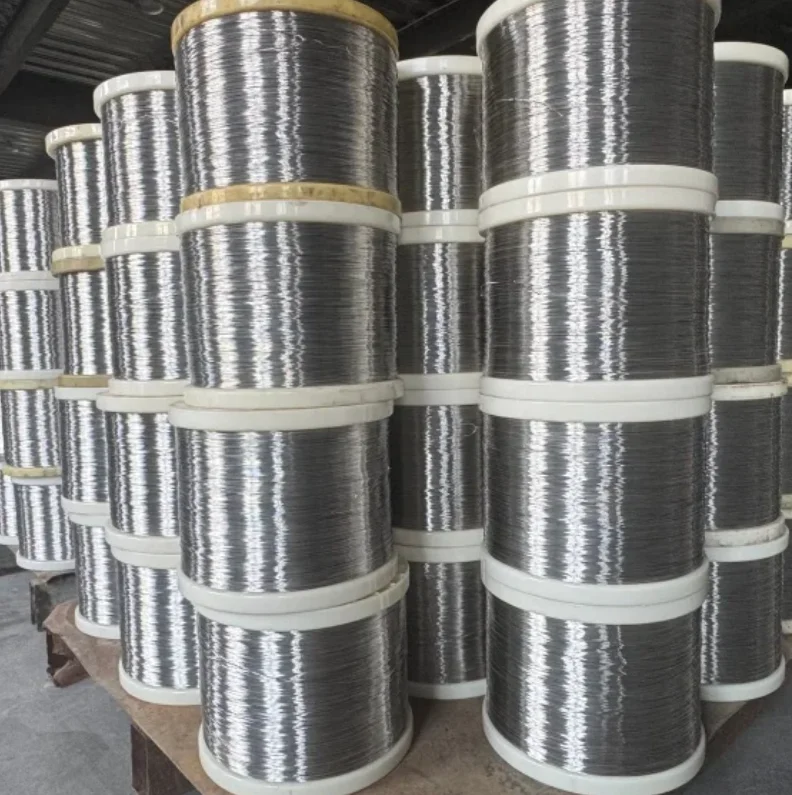
The uniqueness of stainless steel microwire stems from its stringent manufacturing process and resultant properties. It begins with selecting high-grade alloys like AISI 304, 304L, 316, or 316L. The material is then subjected to dozens of multi-pass cold drawing operations, meticulously reducing it to its target micron-level diameter. This demanding process requires intermediate annealing to manage work hardening, culminating in a final heat treatment that tailors the wire to either a soft annealed state for maximum flexibility or a medium cut temper for enhanced tensile strength.
The result is a product with exceptional dimensional precision, achieving tolerances as tight as ±0.001 mm. This precision, combined with a flawless surface, is what allows stainless steel microwire to perform reliably in high-speed weaving looms and precision braiding machines, creating uniform fabrics and meshes for critical applications. Its inherent corrosion resistance, especially prominent in 316 stainless steel wire due to its molybdenum content, ensures long-term performance in harsh environments like chemical processing or within the human body.
Key specifications that define our stainless steel microwire capability include:
Parameter | Specification |
Wire Diameter Range | 0.025 mm, 0.035 mm, 0.04 mm, 0.05 mm, 0.06 mm, 0.07 mm, 0.08 mm |
Material Grades | AISI 304, 304L, 316, 316L |
Available Hardness/Temper | Soft Annealed, Medium Cut |
Diameter Tolerance | High precision control ±0.001 mm |
Typical Tensile Strength (316L, 0.05mm) | 680-980 N/mm² |
Typical Elongation (316L, 0.05mm) | 20-30% |
Spool Type | Multiple types / Customized |
The transition from stainless steel microwire to its application is where its value is fully realized. This category of stainless steel thin wire serves as a foundational component in several advanced industries. In medical technology, its biocompatibility and precision make it ideal for catheter reinforcement, guidewires, and micro-springs in implantable devices. In industrial filtration, wires as fine as 0.025 mm are woven into meshes capable of separating micron-sized particles in pharmaceuticals, chemicals, and high-purity food processing.
Furthermore, stainless steel thin wire is revolutionizing technical textiles. It is woven or knitted into lightweight, high-strength fabrics for cut-resistant gloves, protective clothing, and even aerospace composites. The ability to supply wire in both soft and medium tempers allows textile engineers to fine-tune the balance between fabric flexibility and durability for specific end-uses. For applications demanding maximum corrosion resistance, such as marine environments or chemical exposure, specifying 316 stainless steel wire ensures longevity and reliability where other materials would fail.
For projects exposed to chlorides, acids, or saline environments, 316 stainless steel wire is often the material of choice. The key differentiator is its molybdenum content, which significantly enhances its pitting and crevice corrosion resistance compared to standard 304 grades. When sourcing 316 stainless steel wire, especially in ultra-fine diameters, it is crucial to verify not just the alloy certification but also the production capability behind it.
Manufacturing stainless steel microwire in 316/316L grades requires exceptional process control to maintain its alloy integrity and mechanical properties through extensive drawing. Consistency in diameter and surface finish is paramount to prevent weak points in fine woven meshes or braided structures. This is where expertise matters; a manufacturer with deep experience can ensure the wire delivers its promised corrosion resistance without compromising on the tensile strength or flexibility required for complex fabrication.
The primary advantages are its exceptional strength-to-diameter ratio, outstanding corrosion resistance, and superior dimensional precision. This unique combination allows for the miniaturization of components in medical and electronic devices, enables the creation of high-density filtration meshes, and provides durability in fine woven fabrics that other materials cannot match. Its consistency is critical for automated, high-speed production processes.
Stainless steel thin wire integrates high tensile strength and cut-resistance into textiles without sacrificing excessive flexibility. When woven or knitted, it creates lightweight, durable fabrics for safety gloves, protective apparel, and composite reinforcements. The choice between soft annealed or medium cut wire allows designers to calibrate the fabric's hand feel and mechanical properties precisely for the target application.
316 stainless steel wire contains 2-3% molybdenum, which drastically improves its resistance to pitting and crevice corrosion in chloride-laden environments like marine settings, chemical processing plants, or medical saline solutions. For stainless steel microwire used in implantable medical devices or harsh industrial filters, this grade provides a critical margin of safety and longevity that 304 grade cannot guarantee.
We specialize in ultra-tight tolerances, achieving diameter control within ±0.001 mm across our full range from 0.025mm to 0.08mm. This high precision is maintained through controlled multi-pass drawing and rigorous in-process inspection, ensuring the consistency required for precision weaving, braiding, and coiling applications where even micron-level variations can affect performance.
Absolutely. We offer complete customization for both spool types (size, core material) and wire tempers (Soft Annealed or Medium Cut). This flexibility ensures our stainless steel thin wire integrates seamlessly into your existing production equipment and meets the exact mechanical property requirements of your application, whether for delicate textile knitting or forming rigid micro-springs.
Leveraging over a decade of specialized experience and operating 30 dedicated production lines, Hebei Xiangguang Metal Net Co., Ltd. is committed to delivering stainless steel microwire of uncompromising quality and consistency. Our three-shift operation ensures reliable supply, while our expert team guarantees every spool meets your precise specifications. For projects that demand the unique characteristics of high-performance stainless steel thin wire, especially the superior corrosion resistance of 316 stainless steel wire, Hebei Xiangguang Metal Net Co., Ltd. provides the expertise and precision you can trust. Visit our website to explore our capabilities and contact us today to discuss your specific requirements and request a detailed quotation for your next groundbreaking project.